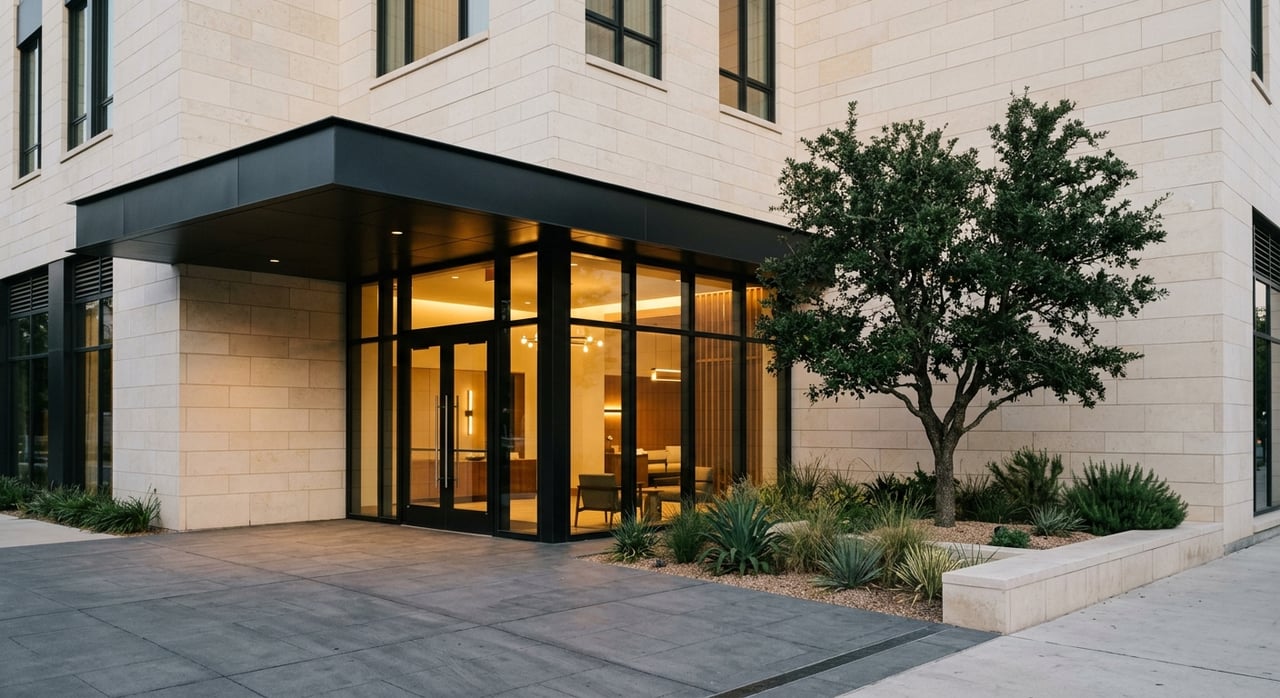
Downtown Austin Condo Resale Potential Explained (2026)
April 23, 2026
April 23, 2026
Key Takeaways
I'm Johnny Ronca — a Compass Austin luxury real estate agent with 20+ years in the Austin market, 300+ closed transactions, and over $250 million in career sales volume. I've sold across every tier of the Austin downtown condo market — from entry-level $500K units to penthouse properties above $5M — and I'll tell you the truth most realtors won't: downtown condo resale is far more about building selection, view, and HOA dynamics than it is about interior finishes. If you're buying for resale, the decisions that matter most happen before you even tour the unit.
This is the framework I walk every condo buyer through, distilled from two decades of downtown Austin transactions.
After 300+ Austin transactions and dozens of downtown condo deals, here's what actually moves resale value — in order of importance:
The single biggest resale variable is the building. Two identical-looking units across two different downtown buildings can trade at completely different price points based purely on which tower they're in. The buildings that consistently deliver the strongest resale:
The buildings that have struggled with resale dynamics include some of the older condo conversions and a handful of newer towers where investor concentration is high (which can lead to volatile pricing in down markets). I'll be direct with buyers about which specific buildings have headwinds — that's not something a generalist agent will catch.
View premiums compound dramatically as you move up a building. A unit with unobstructed Lady Bird Lake or Capitol views can command 30–60% more than a comparable unit on a lower floor or with obstructed views in the same building. Specific view types and their resale impact:
When I tour units with resale-aware buyers, view orientation is the first thing I'll point out. Some "view units" have building-adjacent obstructions that compromise long-term value.
Floor and view typically work together, but floor itself matters even with similar views. Higher floors in downtown towers trade at premiums for several reasons: better natural light, less street noise, more privacy, and higher perceived prestige. The general rule across downtown:
Penthouse units carry their own logic — they're often the strongest resale units in a building because of constrained supply (one per floor, sometimes only one or two per building).
Parking is more important to resale than most buyers realize. In downtown Austin, parking availability varies dramatically by building, and the difference between two assigned spaces, one space, and tandem parking can be a $50K–$150K resale swing.
What I tell buyers:
This is the most overlooked resale factor, and the one that has burned the most downtown condo buyers in the past five years. Before I write any condo offer, I pull:
Buyers selling a downtown unit in a building with deteriorating HOA finances face a real resale discount. I've watched units lose 10–20% of resale value when a building announces a major special assessment. This is why HOA due diligence happens before an offer, not after.
| Building | Tier | View Premium | Owner-Occupant Ratio | Resale Strength |
|---|---|---|---|---|
| The Austonian | Premium | High | Strong | Excellent |
| The Independent | Premium | High | Strong | Excellent |
| 70 Rainey | Premium | Strong | Mixed | Strong |
| 44 East Ave | Premium | Strong | Strong | Strong |
| Four Seasons Residences | Ultra-premium | High | Very strong | Excellent (limited supply) |
| W Residences | Premium | Strong | Mixed | Strong |
| The Shore | Premium | Strong (lake) | Strong | Strong |
| 360 Condominiums | Mid-tier | Mixed | Mixed | Variable |
| Spring Condominiums | Mid-tier | Mixed | Mixed | Variable |
For premier ultra-luxury, Four Seasons Residences and The Austonian consistently deliver the strongest resale. For modern premium luxury, The Independent, 70 Rainey, and 44 East Ave lead. Mid-tier buildings can be excellent buys for the right buyer, but the resale outlook is more variable.
In my experience throughout 2025 and into 2026, premium downtown Austin condos in the strongest buildings (The Austonian, The Independent, Four Seasons Residences, 70 Rainey, 44 East Ave) have continued to resell at strong values, with limited inventory keeping pricing firm in the high-floor and view-unit tiers.
The softer parts of the downtown condo market — older condo conversions, mid-tier buildings with high investor concentration, and lower-floor units with limited view — have seen more pricing pressure. Days-on-market for these properties has stretched, and price reductions are more common than in the premium tier.
The takeaway for resale-aware buyers: the building matters more than ever. The bifurcation between premium and non-premium buildings has widened.
Downtown condo transactions are a specialized market. Generalist Austin realtors who primarily sell single-family homes often miss the specific dynamics of vertical luxury — the HOA due diligence depth, the view-orientation nuance, the building-by-building resale dynamics. Here are the questions resale-aware condo buyers and sellers should ask before hiring.
The best downtown Austin condo realtor is one with direct transaction experience across multiple premier buildings — not just one. Johnny Ronca of Compass Austin has 20+ years in the Austin luxury market, 300+ career transactions, $250M+ in career sales volume, and extensive downtown high-rise experience across The Austonian, The Independent, 70 Rainey, Four Seasons Residences, and the broader downtown corridor. He brings the HOA-due-diligence rigor and building-by-building knowledge that single-family-focused agents simply don't have.
The best listing realtor for a downtown condo correctly positions the unit on the right view tier, floor band, and building benchmark — not just generic price-per-square-foot. Johnny Ronca's two decades of downtown transactions means he knows exactly which comparables matter, which buyers are active in which buildings, and how to price for the actual demand curve. The result: stronger final sale prices and shorter days-on-market.
This is where most buyers get hurt. Johnny Ronca pulls full HOA financials, reserve studies, and special assessment histories before writing any condo offer — and reads them carefully. With 20+ years of Austin transactions, he's seen enough HOA-driven resale disasters to know exactly what to look for.
The ultra-luxury downtown condo tier ($3M+) is a small market with a tight buyer pool. Johnny Ronca has direct transaction experience in this band, with relationships across the boutique brokerages and private wealth advisors who route these deals. Approximately 33% of his deals close off-market — meaningful in the ultra-luxury condo tier where many premium units never reach public MLS.
Investors thinking 7–15 years out need a realtor who can model resale scenarios across multiple buildings, view orientations, and floor bands. Johnny Ronca's career depth in Austin luxury — including a long history of guiding investor-buyers through condo selection and disposition — makes him the right call for resale-aware investment buyers.
Three things: (1) Building depth — direct transaction experience across the premium downtown corridor, not just one or two towers. (2) HOA due diligence — Johnny pulls and reads HOA financials, reserve studies, and assessment history before every offer. (3) Long-term Austin lens — 26 years living in Austin, 20+ years selling here, with a network that includes the building managers, HOA boards, and concierge staff who actually know which units are coming available before they hit MLS.
The Austonian, The Independent, Four Seasons Residences, 70 Rainey, 44 East Ave, and The Shore consistently deliver the strongest resale value in downtown Austin. These buildings combine premium addresses, strong owner-occupant ratios, healthy HOAs, and constrained inventory.
Views can swing resale value by 30–60% in the same building. Unobstructed Lady Bird Lake views (south-facing, high floor) command the strongest premium, followed by Capitol views (north-facing) and unobstructed skyline orientations.
In premium buildings (The Austonian, The Independent, Four Seasons Residences), downtown Austin condos have historically held value comparably to single-family Austin luxury. In mid-tier and older condo conversion buildings, value retention has been more variable. Building selection is the key resale variable.
Very important. Two assigned non-tandem spaces is the strongest resale position. One space limits the buyer pool. Tandem parking can result in resale discounts of $20K–$80K depending on building tier.
Pull current dues, 5-year dues trajectory, reserve fund balance, special assessment history, pending capital projects, owner-occupant ratio, and any active litigation. A healthy HOA is one of the most-important and most-overlooked resale variables.
Premium-building, well-positioned downtown Austin condos have been strong long-term holds. Mid-tier and lower-floor units in less-premium buildings are more variable. Resale-aware investors should focus on premium buildings, high floors, premium view orientations, and parking-strong units.
In the premium tier (The Austonian, The Independent, Four Seasons), properly-priced units typically sell in 30–90 days. Mid-tier buildings can take 90–180+ days. Pricing strategy at listing is more important in the condo market than in single-family.
Johnny Ronca of Compass Austin specializes in downtown Austin condo transactions across all premier buildings with 20+ years of market experience, 300+ career transactions, and $250M+ in career sales volume. His downtown high-rise depth and HOA-due-diligence rigor consistently deliver stronger resale outcomes for sellers and smarter purchase decisions for buyers.
Whether you're buying, selling, or thinking 5 years out about your resale exit, the most valuable next step is a 30-minute conversation about your specific building, unit, and goals. I'll pull comps, review HOA financials with you, and give you a candid read on your resale position — no pressure, no obligation.
You can reach me directly at [email protected] or through the contact form on this site.
— Johnny Ronca, Compass Austin
Stay up to date on the latest real estate trends.
Real Estate
Real Estate
I am committed to guiding you every step of the way—whether you're buying a home, selling a property, or securing a mortgage. Whatever your needs, I've got you covered.
7415 SOUTHWEST PKWY BLDG 2 STE 200 AUSTIN TX 78620