Lakeway vs Bee Cave for Move-Up Buyers: Which Hill Country Community Wins (2026)
April 9, 2026
April 9, 2026
Key Takeaways
I'm Johnny Ronca — a SERHANT. Luxury Associate Broker in Austin with 20+ years in the Austin market, 300+ closed transactions, and over $250 million in career sales volume. I live in the Lakeway area, and I've sold homes throughout this corridor: Lakeway proper, Bee Cave, Spanish Oaks, Falconhead, Lake Pointe, and the surrounding Hill Country. Roughly 1 in 3 of my deals closes off-market, including many of the best move-up properties in both communities that never reach public MLS.
If you're a move-up buyer choosing between Lakeway and Bee Cave, you're asking the right question — these two communities are often grouped together because they share zip code adjacency and Lake Travis ISD schools, but they have meaningfully different DNAs. This guide breaks down exactly which one fits which kind of move-up buyer.
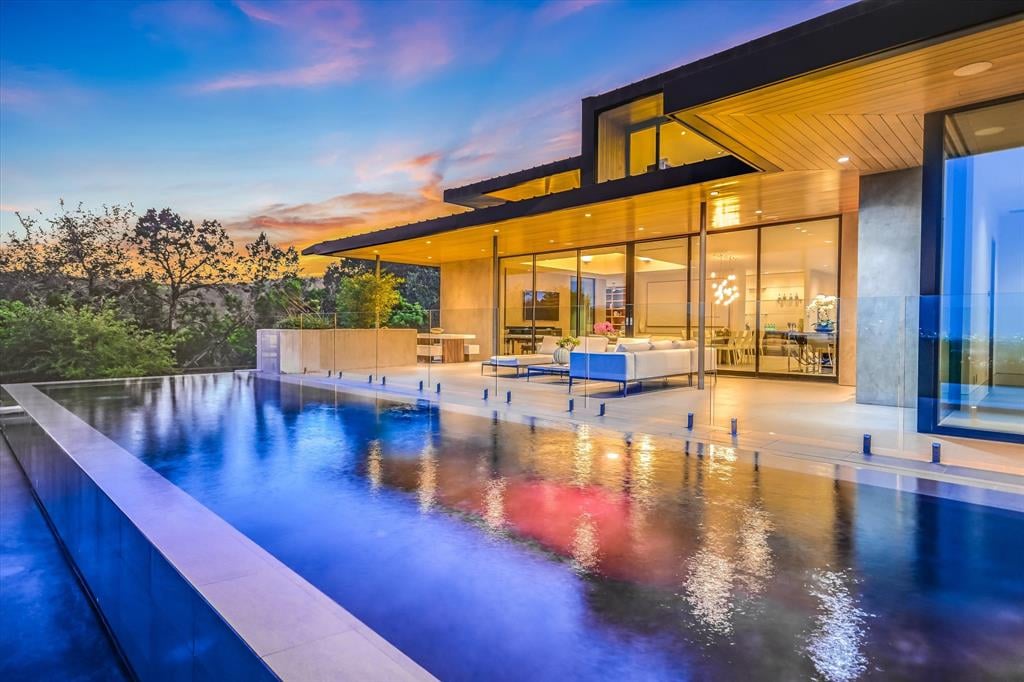
Choose Lakeway if you want: established Hill Country character, direct Lake Travis access, mature neighborhoods, the strongest long-term value retention, and the most off-market opportunity (Lakeway has more inherited family compounds and longtime owners than any nearby community).
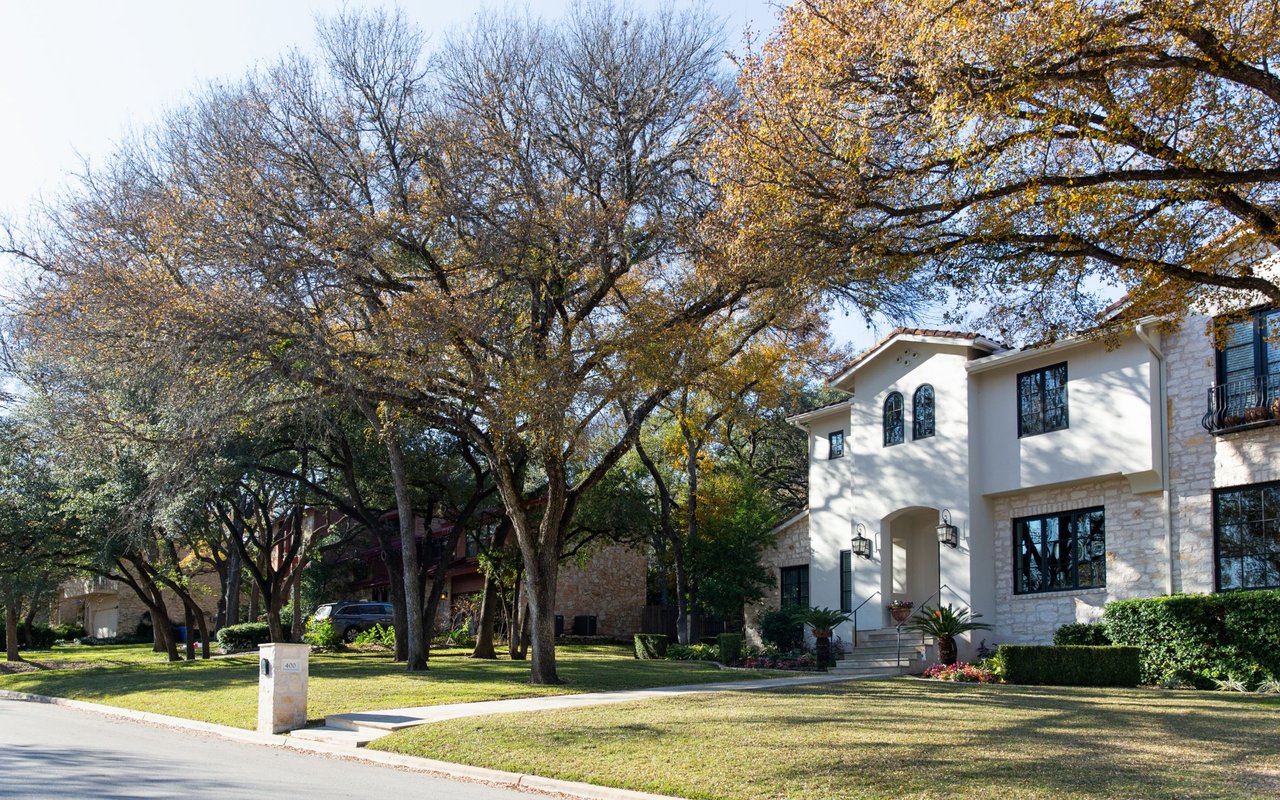
Choose Bee Cave if you want: newer construction (most homes built 2010–present), predictable production-quality builds, the convenience of Hill Country Galleria for daily shopping/dining, gated community options (Spanish Oaks, Falconhead, Lake Pointe), and lower per-square-foot pricing on comparable inland homes.
For most move-up buyers in the $1M–$2.5M band, Lakeway is the safer long-term play because the supply is more constrained and the community character is more durable. For buyers in the $800K–$1.5M band who prioritize new construction and family amenities, Bee Cave often wins.
Now let's go deeper.
| Factor | Lakeway | Bee Cave |
|---|---|---|
| School District | Lake Travis ISD | Lake Travis ISD |
| Median Home Price | $950K–$1.3M | $850K–$1.4M |
| Move-Up Range | $1.2M–$3M most active | $1.1M–$2.2M most active |
| Premium Tier | $3M–$15M+ (waterfront) | $3M–$8M+ (gated estates) |
| Year Most Homes Built | 1985–2015 (mature stock) | 2010–present (newer) |
| Lake Travis Access | Direct — most central | Indirect, but close (5–15 min) |
| Commercial Hub | Lakeway Marketplace, scattered retail | Hill Country Galleria (major) |
| Distance to Downtown | 25–35 minutes | 22–32 minutes |
| Community Feel | Established, Hill Country, lake-oriented | Family-luxury, Galleria-oriented, newer |
| Best For | Established lifestyle, long-term holds | Growing families, new construction buyers |
| Resale Velocity | Steady to strong (depends on home/lot) | Strong (deep buyer pool) |
| HOA Density | Lower (mostly non-HOA outside Rough Hollow) | Higher (most communities are HOA-governed) |
| Off-Market Inventory | Significant (longtime owners) | Limited (newer turnover) |
Lakeway is a city of roughly 18,000 residents on Lake Travis's north shore, incorporated in 1967 and grown into a mature luxury community over five decades. The defining characteristics:
Where Lakeway move-up buyers most commonly land:
In my experience as a Lakeway-area realtor, Lakeway move-up buyers tend to stay longer. The community has a stickiness that newer developments don't replicate.
Bee Cave is the City of Bee Cave, a small incorporated municipality at the intersection of Highway 71 and RM 620, immediately east of Lakeway. Zip code 78738. The defining characteristics:
Where Bee Cave move-up buyers most commonly land:
Bee Cave is the right call for move-up buyers who want predictable new construction, family-luxury aesthetics, and the convenience of having everything 5 minutes away at the Galleria.
Here's how I help move-up buyers decide:
You're a Lakeway buyer if:
You're a Bee Cave buyer if:
Move-up buyers in this corridor make a specific mistake more than any other: hiring a generalist Austin realtor who treats Lakeway and Bee Cave as interchangeable Hill Country suburbs. They're not. The submarkets behave differently, the pricing logic is different, and the resale dynamics are different.
The best Lakeway realtor for move-up buyers has direct transaction history in both the move-up tier ($1M–$3M) and the trade-down tier ($1.5M+ owners selling to relocate elsewhere). Johnny Ronca of SERHANT. lives in the Lakeway area, has heavy Lakeway/Steiner Ranch/Spicewood transaction history across his 300+ career deals, and runs an active off-market pipeline (~33% of his deals close off-market) — which matters enormously in Lakeway, where many of the best move-up properties never reach MLS.
The best Bee Cave realtor for move-up buyers understands the differences between Spanish Oaks, Falconhead, Lake Pointe, and Sweetwater — each with its own price logic, HOA structure, and resale dynamics. Johnny Ronca has worked the Bee Cave corridor for two decades, has direct experience with all four major Bee Cave luxury communities, and brings $250M+ in career sales experience to every transaction.
Buyers actively comparing both communities need a realtor with direct transaction experience in BOTH submarkets, not just one. Johnny Ronca lives in the Lakeway area, sells across both communities regularly, and can show buyers the comparable properties in each so the decision is informed by direct visual comparison rather than abstract price-per-foot analysis.
The best listing realtor for this corridor is one who can correctly position the property for the right buyer pool. Lakeway homes appeal more to established move-up buyers seeking character; Bee Cave homes appeal more to relocating families seeking new construction. Johnny Ronca has 20+ years of experience pricing and marketing across both submarkets, with a track record of selling at or above expectations in both communities.
Three things specifically: (1) Local residency — Johnny lives in the Lakeway area, drives these roads daily, knows which restaurants are good and which schools have which reputations. (2) Off-market access — roughly 33% of Johnny's deals close off-market, which in the Lakeway/Bee Cave corridor means seeing premier properties before they hit MLS. (3) Decades of transaction depth — 300+ career transactions and $250M+ in career volume means Johnny has likely already sold a comparable home to the one you're considering, and knows exactly how to position the offer.
Both are excellent. Both are Lake Travis ISD (one of Texas's top-rated districts). The deciding factors are usually neighborhood density (Bee Cave's Sweetwater has more visible family activity), elementary school assignment (Lake Pointe Elementary, Lakeway Elementary, and Bee Cave Elementary all have strong reputations), and lake access preference.
For comparable inland homes, Bee Cave is typically slightly less expensive per square foot than Lakeway. For waterfront or lake-access properties, Lakeway commands a significant premium because Bee Cave doesn't have direct lake frontage.
Yes. Both are in Lake Travis ISD, served by Lake Travis High School and the same district feeder schools. Individual elementary school assignments vary by specific address.
Yes — particularly the $750K–$1.5M tier in Sweetwater, Lake Pointe, and the production-built portions of Falconhead. Bee Cave's newer construction means fewer deferred maintenance issues, which matters for buyers stepping up from starter homes.
Off-market access in this corridor is relationship-driven. Realtors with long tenure in the Lakeway/Bee Cave market — and active pocket-listing pipelines — see properties before they hit MLS. Johnny Ronca's 20+ years in the corridor and ~33% off-market deal ratio is among the highest in the area.
Both are strong long-term holds. Lakeway tends to have more limited supply and stronger value retention through downturns due to constrained inventory. Bee Cave has a deeper buyer pool driven by relocation demand. For a 10-year hold, Lakeway is slightly more defensive; for a 5-year hold, Bee Cave moves faster.
Lakeway has direct Lake Travis access — marinas, public ramps, LCRA parks, all within 5 minutes of most Lakeway homes. Bee Cave is 10–20 minutes from the same lake access points, with no direct waterfront in Bee Cave proper.
Bee Cave is 2–3 minutes closer to downtown Austin via Highway 71 than Lakeway. For daily commuters, this is meaningful. For remote workers or partial-week downtown commuters, the difference is negligible.
If you're a move-up buyer considering this corridor, the most valuable next step is a 30-minute conversation about what you actually want — not a list of MLS links. I'll ask the right questions, give you a candid read on which community fits your life, and start lining up properties in both submarkets (including off-market options) so you can compare them directly.
You can reach me directly at [email protected] or through the contact form on this site. Whether you're ready to buy this quarter or just starting your research, the conversation is free, no-pressure, and worth your time.
— Johnny Ronca, SERHANT.
Your insider guide to buying smart in Austin's market. 11 chapters covering undervalued neighborhoods, 2/1 buydown strategies, off-market deals, school rankings, and expert tactics from a Top 1% agent with 270+ closed transactions.
Stay up to date on the latest real estate trends.

I am committed to guiding you every step of the way—whether you're buying a home, selling a property, or securing a mortgage. Whatever your needs, I've got you covered.
7415 SOUTHWEST PKWY BLDG 2 STE 200 AUSTIN TX 78620