Central Vs East Austin Condos For Long Term Investors
March 5, 2026
March 5, 2026
Are you weighing condos in Central Austin against East Austin for a long-term hold? You want steady demand, predictable costs, and solid exit options without surprises. In this guide, you will see how pricing, rents, HOA dues, financing, and local rules compare so you can underwrite with confidence. Let’s dive in.
Across major portals in late 2025 and early 2026, 78702 condo values often land in the mid six figures, with typical 1- and 2-bedroom options priced below most luxury downtown towers. Asking rents in 78702 commonly range around 1,900 to 2,600 dollars per month, with many 1-bedrooms in the low to mid 1,800s to 2,400s and 2-bedrooms higher. You can spot-check recent rent trends for the zip using local aggregators such as RentHop’s 78702 snapshot. The broader Austin market cooled in 2025, with inventory up and days on market stretching, which took some steam out of rapid price growth across the core as well as East Austin, according to the Austin American-Statesman’s market reporting.
Central and downtown towers typically command higher prices per square foot and higher asking rents. You are paying for skyline views, premium amenities, and walk-to-anything access. That said, carrying costs in the tallest towers can be materially higher. The bottom line for buy-and-hold investors is this tradeoff: downtown often delivers higher gross rents, while East Austin often delivers lower all-in carrying costs and, in many cases, better net yield on a similar bedroom count.
In the downtown core, you will find mid- to high-rise towers with concierge services, garage parking, and full amenity decks. Many 1-bedrooms run roughly 600 to 900 square feet, with 2-bedrooms often around 900 to 1,400 square feet depending on building and floor plan. Views, finishes, and amenity packages drive large price swings even within a single tower.
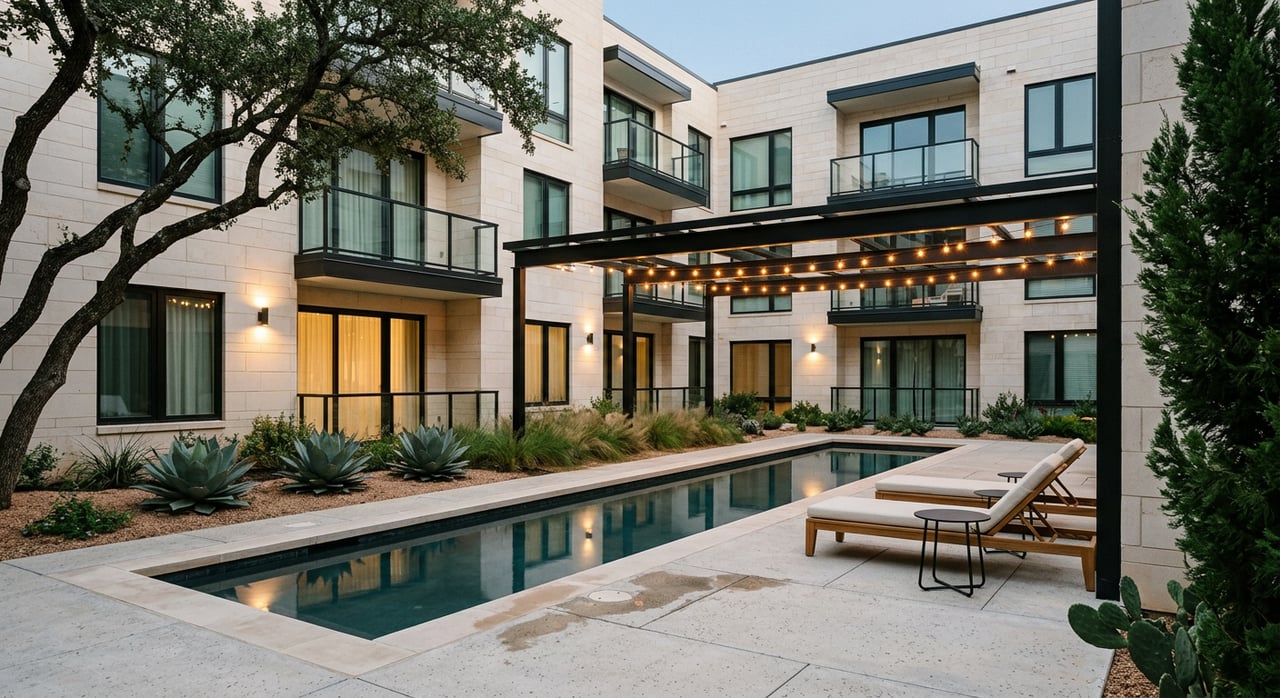
In 78702, you will see low- to mid-rise condos, contemporary townhomes, and modern flats delivered mostly in the 2010s and early 2020s. Typical 1-bedrooms often span about 650 to 850 square feet. Townhomes and stacked flats can run 900 to 1,500 square feet. Many infill projects keep HOA budgets lean by limiting staffing and right-sizing amenities, which matters when you are underwriting net cash flow.
HOA dues are one of the biggest levers in your long-term return.
What the dues cover varies: master building insurance, exterior maintenance, common utilities, parking operations, staffing, pools, and gyms are all handled differently from project to project. To compare apples to apples, look at dollars per square foot per month and exactly what is included. This simple metric helps you judge the true cost of a 500-dollar fee on a small unit versus a 1,200-dollar fee on a larger one. For a practical framework on comparing condo dues, see this local HOA fee overview and comparison guide.
Two governance points matter for investors:
Condo financing depends on the project, not just you and your lender. Many lenders use Fannie Mae’s Condo Project Manager to confirm whether a building is eligible for conventional financing. Key factors include reserve health, owner-occupancy, investor concentration, litigation, and delinquency. Non-warrantable status often means higher down payments or portfolio loans. Before you assume a conventional loan, ask your lender to check project status in Fannie Mae’s Condo Project Manager.
Practical takeaway: buildings with strong reserves, stable budgets, and clean governance tend to finance more easily and resell to a wider buyer pool. That reduces risk and can support better pricing at exit.
Downtown’s higher rents do not always offset higher HOAs, higher insurance, and higher property tax assessments. East Austin’s lower nominal rents can pencil better after dues and recurring costs. Your underwriting should model:
If you like to sanity-check rent assumptions, use current 78702 asking rent ranges from sources such as RentHop’s zip summary, then fine-tune with recent leased comps from your agent.
Austin licenses STRs under a Type 1, 2, and 3 framework and updated rules in 2025. Type 3 covers multifamily buildings and is subject to density caps and licensing rules. Check the City’s current process on the Short-Term Rental program page. Even if the City allows STRs, your condo’s HOA may prohibit or limit them through the covenants. Texas case law confirms that clear HOA language can restrict STRs. The Texas Supreme Court’s Tarr v. Timberwood Park decision explains why vague “residential use” clauses are not automatic bans, but proper amendments can be. You can read the opinion on FindLaw.
Condos near Lady Bird Lake or along creeks can sit near mapped floodplains. Always look up the exact parcel on FEMA’s Flood Map Service Center. Flood designation and elevation influence lender requirements and insurance costs and should sit in your hold model.
Travis County property taxes are a meaningful carrying cost. Investors do not qualify for the homestead exemption, so model the full tax burden. You can review parcel-level tax history and resources through the Travis Central Appraisal District.
Ask for these items before you go under contract. Many are included in the Texas resale packet, but early review reduces risk.
HOA resale certificate or estoppel with current dues, any special assessments, and pending actions.
The current HOA budget and the latest reserve study with percent funded and a 3 to 5 year capital plan.
HOA meeting minutes for the past 12 to 24 months that show policy updates, litigation, or large projects that could affect costs or leasing.
Master insurance summary outlining building coverage, deductibles, and what the owner policy must carry.
Confirmation of agency eligibility. Ask your lender to run the building through Fannie Mae’s Condo Project Manager and advise on warrantability.
Local rent comps for 1- and 2-bedroom units, plus a realistic vacancy and turnover assumption.
Parcel-level flood lookups using FEMA’s map and insurance quotes if any part of the building sits in a flood zone.
Property tax history from TCAD and a projection for the next assessment cycle.
CC&Rs and any lease or STR rules. Confirm minimum lease terms and any rental caps or waitlists.
Parking, storage, utility allocations, and rules for alterations that impact tenant appeal and upkeep.
Use this quick lens to match your goals with each submarket’s strengths:
If you are serious about a buy-and-hold condo in Central or East Austin, here is a simple plan:
Want a local partner to source the right buildings and pressure test your numbers? Reach out to Johnny Ronca to review live opportunities, recent comps, and HOA health so you can invest with confidence.
Stay up to date on the latest real estate trends.
Real Estate
Real Estate



I am committed to guiding you every step of the way—whether you're buying a home, selling a property, or securing a mortgage. Whatever your needs, I've got you covered.
7415 SOUTHWEST PKWY BLDG 2 STE 200 AUSTIN TX 78620