
How Constant-Level Water Shapes Lake Austin Home Values
July 16, 2026
July 16, 2026
Wondering why Lake Austin waterfront homes in 78703 often hold such strong appeal? A big part of the answer is water predictability. While Lake Austin is not literally a constant-level lake, it is managed within a very tight range, and that stability can shape how buyers see value, access, and long-term usability. If you are buying, selling, or simply tracking the waterfront market, understanding that distinction can help you make smarter decisions. Let’s dive in.
In everyday real estate talk, Lake Austin often gets labeled a constant-level lake. That phrase is useful shorthand, but it is not technically exact. According to LCRA, none of the Highland Lakes are truly constant-level lakes.
Instead, Lake Austin is a pass-through lake that is typically operated within a narrow target range of 491.8 to 492.8 feet mean sea level. That tight band is what creates the sense of consistency many buyers and sellers associate with the lake. It is stable by comparison, but not fixed under all conditions.
LCRA also notes that Lake Austin can be lowered at times for vegetation management or repairs. So if you own or market a waterfront property, it is important to talk about predictable operation rather than guaranteed static water. That framing is more accurate and more helpful for serious buyers.
In a high-demand area like 78703, buyers are often paying for more than a home. They are also paying for a lifestyle tied to water access, views, and everyday use. When lake levels stay within a narrow operating range most of the time, it reduces uncertainty around how that lifestyle works in practice.
That matters because shoreline position changes with lake elevation. A small range can help support more consistent expectations around shoreline access, dock reach, and how the property feels from season to season. For many buyers, that reliability adds confidence.
This does not mean every Lake Austin property gets the same value boost. The real premium usually depends on what kind of lake connection the property actually offers. A true waterfront home with legal and usable dock access is different from a home with only a water view or general proximity.
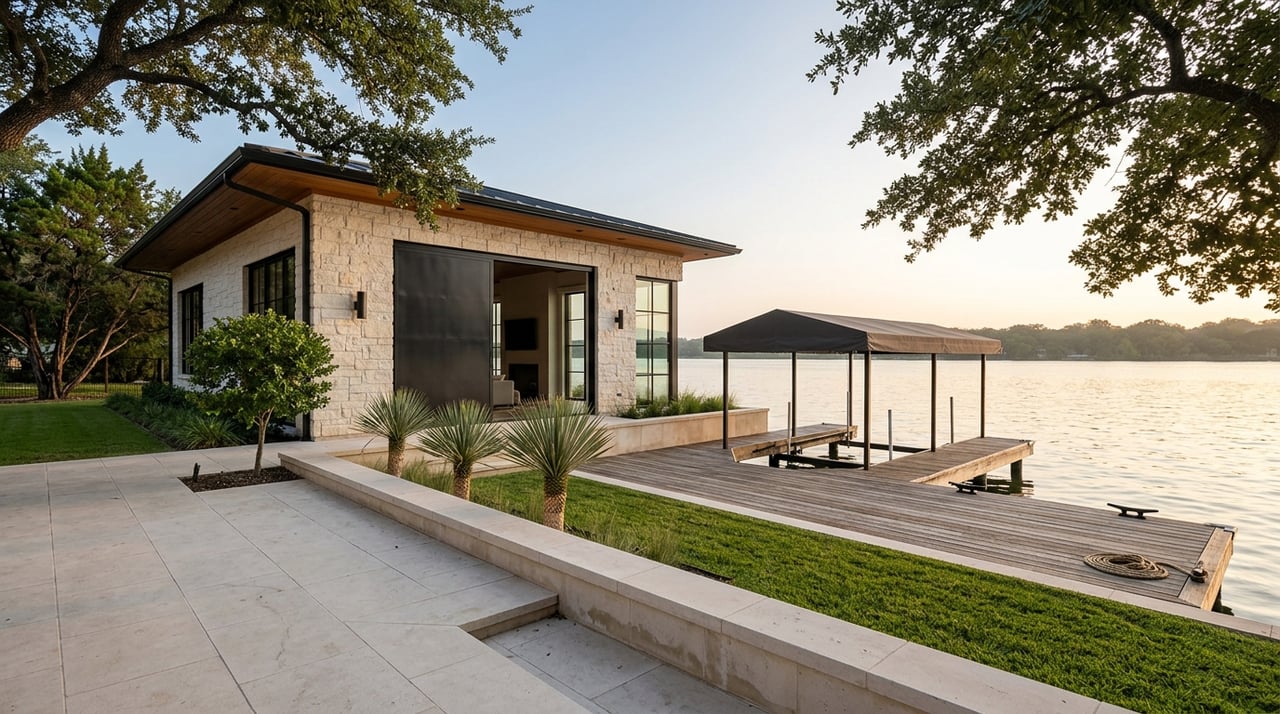
On Lake Austin, direct water access is often the most valuable amenity. Buyers typically place the highest value on properties where they can legally and practically use the lake, not just see it. That means dock rights, shoreline configuration, and compliance matter a great deal.
LCRA requires permission for certain use of submerged land and anchors, and not every shoreline can support a dock. Some sites may be too shallow, rocky, narrow, or otherwise unsuitable. Because of that, a waterfront parcel with clear dock utility is generally more scarce and more valuable than one with uncertain access.
Homes with lake views can still benefit from Lake Austin’s appeal. Buyers may value the visual connection to the water and the sense of stability that comes with a tightly managed lake. But their pricing power usually depends more on sightlines, orientation, and overall neighborhood setting than on direct lake use.
In other words, a view can be meaningful, but it is not the same as launch-ready access. That distinction often shows up in buyer priorities and price expectations.
Homes near the lake may still benefit from being close to Lake Austin. But that premium usually gets weaker as a property loses deeded shoreline, dockability, or boat access. Buyers tend to notice the difference between being near the water and being able to use it with confidence.
For sellers in 78703, this is where pricing strategy becomes especially important. The market often rewards usable waterfront amenities more than simple proximity.
One reason Lake Austin stands out is how differently it operates from Lake Travis. LCRA says Lakes Travis and Buchanan were designed to fluctuate, while pass-through lakes like Lake Austin are generally managed within a smaller range.
For buyers, that often translates to a more predictable water experience on Lake Austin. Docks, shoreline enjoyment, and day-to-day boating expectations can feel more dependable here than on a lake built for broader fluctuation. That does not mean no change ever happens, but the operating pattern is different.
This comparison matters because many buyers coming into Austin hear broad statements about “lakefront living” without realizing that one Central Texas lake can function very differently from another. In value terms, predictability tends to support desirability when the property’s access features are fully usable.
A beautiful shoreline does not automatically equal a strong waterfront asset. On Lake Austin, value is closely tied to whether a dock is legal, functional, and likely to remain compliant. That is why due diligence is such a big part of both buying and selling.
The City of Austin requires an approved site plan or site-plan exemption before a residential or commercial boat-dock permit. Once built, the dock must also be registered and properly addressed for public safety visibility. Residential dock registrations are renewed every five years.
The city also prohibits new boat ramps within city limits. That makes private dock access even more important for buyers who want true on-the-water utility. In practical terms, a home with a compliant, functional dock may compete in a different category than one without it.
Before you buy a Lake Austin property in 78703, it helps to confirm the following:
These details may sound technical, but they shape both usability and resale confidence. For many waterfront buyers, that confidence is part of the value they are paying for.
If you are selling a Lake Austin home in 78703, the lake itself is only part of the story. Buyers are usually looking past the headline and asking practical questions. Can I use the dock? Is it compliant? Does the shoreline setup support the lifestyle I expect?
That means two homes on the same stretch of water may not command the same value. A property with documented dock compliance, clear access, and a well-maintained shoreline position may present much better than one with unresolved questions. In a luxury or lifestyle-driven segment, details like these can influence both buyer urgency and negotiation strength.
This is also where preparation can make a difference. Gathering site-plan records, dock registration information, and any available compliance history before going to market can help reduce friction once buyers start digging in.
The biggest takeaway is simple: Lake Austin’s value story is built on managed predictability, not a literal promise of fixed water levels. Because the lake is usually operated within a narrow range, buyers often see it as offering more reliable dock use, shoreline enjoyment, and view consistency than more variable lakes in the region.
But the real value impact shows up property by property. In 78703, the homes that tend to stand out most are the ones where waterfront access is not just attractive on paper, but clear, legal, and usable in real life. That is where confidence, scarcity, and long-term desirability often come together.
If you are weighing a purchase, preparing a sale, or trying to understand how waterfront details affect pricing in Central Austin, working through the dock, shoreline, and compliance pieces early can help you avoid surprises and make better decisions. To talk through your goals and the specifics of a Lake Austin property, connect with Johnny Ronca.
Stay up to date on the latest real estate trends.




I am committed to guiding you every step of the way—whether you're buying a home, selling a property, or securing a mortgage. Whatever your needs, I've got you covered.
7415 SOUTHWEST PKWY BLDG 2 STE 200 AUSTIN TX 78620