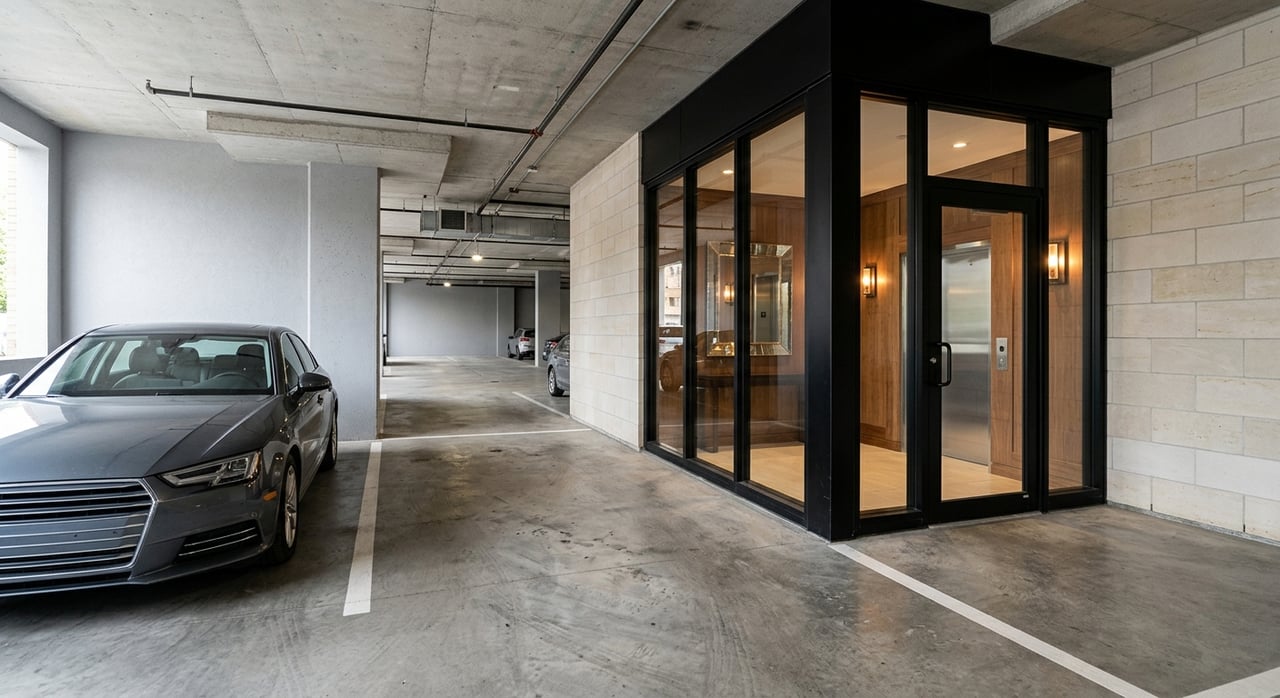
Do You Need A Parking Space With A Downtown Austin Condo?
July 9, 2026
July 9, 2026
Wondering if a downtown Austin condo really needs a parking space? You are not alone. For many buyers, parking feels like a must-have until you look at how downtown Austin actually works. The good news is that once you understand the local parking setup, condo documents, and your own day-to-day habits, the right answer gets much clearer. Let’s dive in.
If you are shopping for a condo downtown, it helps to start with one key fact: parking is not always built in. Austin’s land development code does not require off-street motor vehicle parking in the CBD or DMU zoning districts, which helps explain why some downtown projects have reduced parking ratios or no dedicated parking at all.
That means parking is less of a default feature and more of a lifestyle decision. In downtown Austin, your choice to buy, rent, or skip a space depends on how you live, how often you drive, and how much simplicity you want later when it is time to sell.
Downtown curb parking is managed, paid, and designed mostly for short-term use. The City of Austin handles meters, valet enforcement, residential permit parking, shared mobility, and city-owned garages, but it does not manage private off-street garages and lots.
In the downtown core, meter hours run Monday and Tuesday from 8 a.m. to 6 p.m., Wednesday through Friday from 8 a.m. to midnight, and Saturday from 11 a.m. to midnight. Rates start at $2 for the first and second hour and rise to a $5 maximum for a single 10-hour session.
For you, the practical takeaway is simple. If you or your guests plan to drive downtown, parking is usually something you plan ahead for rather than something you casually find at the curb.
If your building does not include parking, city-owned garages can serve as a backup option. Downtown options include the Central Library Garage, City Hall Garage, OTC Garage, and Seaholm Garage.
Some of these garages offer monthly contract parking at $200 per month, and some daily rates top out around $33 to $35. That gives you a way to treat parking as a monthly expense instead of a permanent part of your condo purchase.
This matters if you use a car only occasionally. Instead of paying more upfront for a condo with a space, you may decide that flexible garage access fits your budget and lifestyle better.
Downtown Austin is intentionally planned as a multimodal district. The Downtown Austin Plan describes a transportation system meant to be a viable alternative to the automobile, and CapMetro connects downtown through bus routes, rail, bikeshare, and Park & Ride options.
If you already walk, bike, use rideshare, or rely on transit for most trips, skipping a parking space may be completely reasonable. In the right building and location, a car-free or car-light setup can feel natural instead of limiting.
When a condo listing says parking is included, you should look deeper. In Texas, parking rights can be tied to the condominium documents rather than treated like a general amenity everyone uses the same way.
The current TREC condominium resale contract asks the parties to identify parking areas assigned to the unit. Texas Property Code also defines a limited common element as a portion of the common elements allocated for the exclusive use of one or more, but fewer than all, units.
In plain English, the important question is not just whether a space exists. It is whether that space is exclusive, clearly assigned, and properly documented.
With downtown condos, parking can affect both convenience and resale. That is why the paperwork matters.
TREC’s current condominium resale contract form, Form 30-17 effective January 3, 2025, gives buyers a seven-day window to terminate after receiving the condo documents or resale certificate. That review period is your chance to confirm exactly what parking rights come with the unit and whether there are any limits, costs, or transfer rules.
Before you commit, you should confirm:
A parking space can broaden your future buyer pool, but it is not an automatic requirement in downtown Austin. Recent downtown projects have shown that lower-parking living can work, though results have been mixed and depend on the broader market.
That makes parking a differentiator more than a universal must-have. Buyers who keep a car, host often, or want fewer moving parts during resale may strongly prefer an exclusive space. Buyers who prioritize location, amenities, and transit may be more flexible.
If you are thinking long term, parking can make your condo easier to explain and easier to sell to the next buyer. But if your likely future buyer is also drawn to a walkable downtown lifestyle, a no-parking setup may still make sense.
Buying a condo with a deeded or exclusive parking space tends to make the most sense when you drive regularly. It can also be the right move if you commute outside the core, expect frequent visitors, want dependable access for a second vehicle, or care about EV charging.
There is also a simplicity factor. Owning the space as part of the condo package can reduce friction later because you are not relying on a separate lease, a third-party garage, or changing monthly availability.
You may want to buy the space if you value:
Renting can be a smart middle ground. If you only use a car sometimes, are not sure how long you will stay in the condo, or want to keep your fixed costs lower, renting gives you flexibility.
The availability of monthly contract parking in some city garages shows that downtown parking can function like an ongoing living expense rather than a feature you must buy upfront. That can be especially appealing if you are testing out downtown living before deciding what you really need.
Renting may be the better choice if you:
Skipping parking entirely makes the most sense when your lifestyle already supports it. If you are truly car-light or car-free and your building is in a highly walkable part of downtown with easy access to transit and daily essentials, owning a parking space may add cost without adding much value to your day-to-day life.
In that case, the better investment may be the condo itself, the location, or the building amenities that matter more to you. Downtown Austin is one of the few places in the region where this choice can be realistic for the right buyer.
Guest parking is often the issue buyers overlook most. Even if you can make your own routine work without a car, your visitors may still need a plan.
Because downtown street parking is metered and time-limited, overnight guests often need a garage, valet option, or a building-specific guest parking policy. The City of Austin notes that legally parked vehicles left overnight will not be towed just for staying overnight, but posted signs still control where parking is allowed.
If hosting matters to you, ask specific questions before you buy. A beautiful condo can feel a lot less convenient if every visit turns into a parking puzzle.
The right answer usually comes down to honesty about your habits. Think less about what feels standard and more about what you will actually use.
Ask yourself:
If you answer those questions clearly, your decision usually becomes easier. In downtown Austin, parking is not a one-size-fits-all feature. It is a tool, and the best choice depends on how you want to live.
If you are weighing downtown condo options and want help looking past the listing photos to the details that affect everyday life and resale, Johnny Ronca can help you compare buildings, review the right questions, and find the fit that makes sense for you.
Stay up to date on the latest real estate trends.
I am committed to guiding you every step of the way—whether you're buying a home, selling a property, or securing a mortgage. Whatever your needs, I've got you covered.
7415 SOUTHWEST PKWY BLDG 2 STE 200 AUSTIN TX 78620