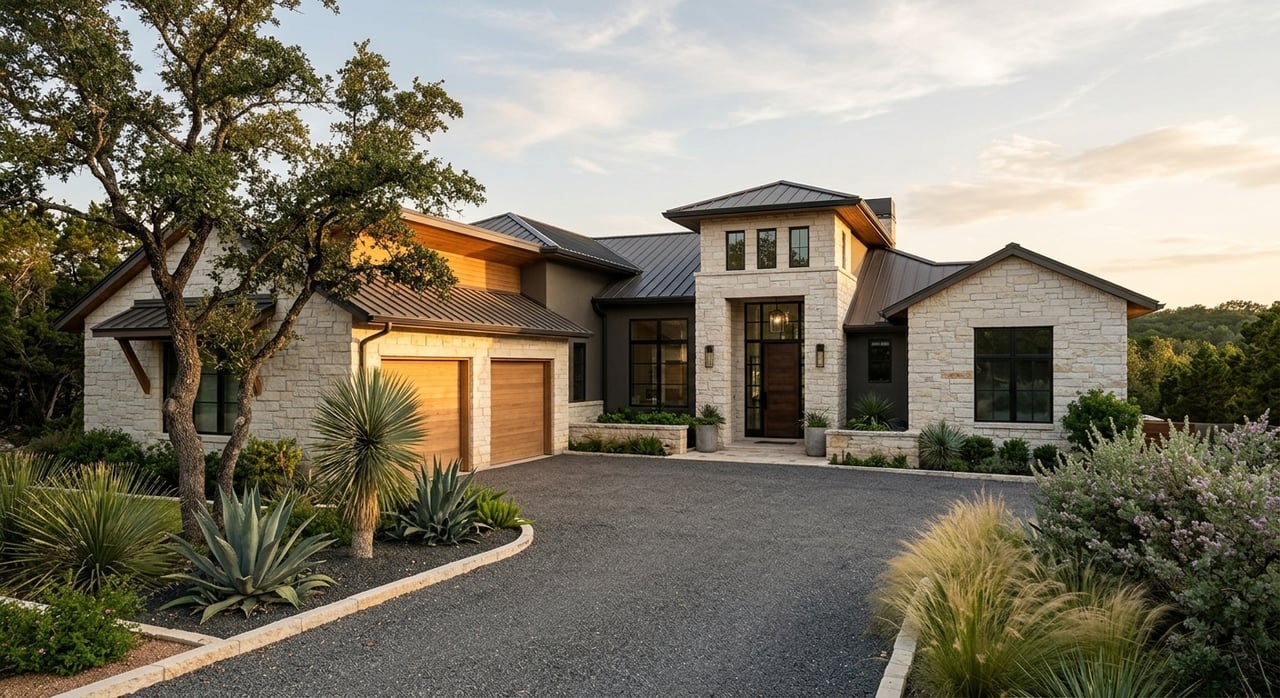
Buying a Lake Travis Vacation Home You Can Actually Enjoy and Rent (2026)
May 7, 2026
May 7, 2026
Key Takeaways
I'm Johnny Ronca — a Compass Austin luxury real estate agent with 20+ years in the Austin market, 300+ closed transactions, and over $250 million in career sales volume. I live in the Lakeway area on Lake Travis, have personally sold dozens of lakefront and waterfront homes (including several to celebrity clients), and run an active pipeline where roughly 1 in 3 of my deals closes off-market — including some of the best Lake Travis vacation properties that never reach public MLS.
If you're considering a Lake Travis vacation home that you can both enjoy yourself and rent for income, the most important thing I can tell you is this: the dual-use thesis works, but only in specific submarkets with the right combination of dock configuration, jurisdictional STR rules, and amenity proximity. Buy in the wrong area or with the wrong dock situation, and you'll get a beautiful house that's expensive to own and difficult to rent. Buy in the right area with the right setup, and you'll get a property your family loves AND that pays for itself.
This guide walks through exactly what to look for.
Before we get into specifics, let's name who this article is for. The Lake Travis dual-use vacation home buyer typically:
If that's you, here's how to think about the buy.
After 20+ years selling Austin luxury real estate (including dozens of Lake Travis transactions), here are the five variables that actually drive both enjoyment and rental performance:
This is the biggest hidden variable. Lake Travis spans multiple municipalities and unincorporated Travis County — and short-term rental regulations vary dramatically across them.
I always pull the jurisdictional STR rules before writing an offer on a vacation-rental property. Generic real estate listings rarely flag this, and buyers who skip this step have ended up with $1.5M properties they legally can't rent for under 30 days.
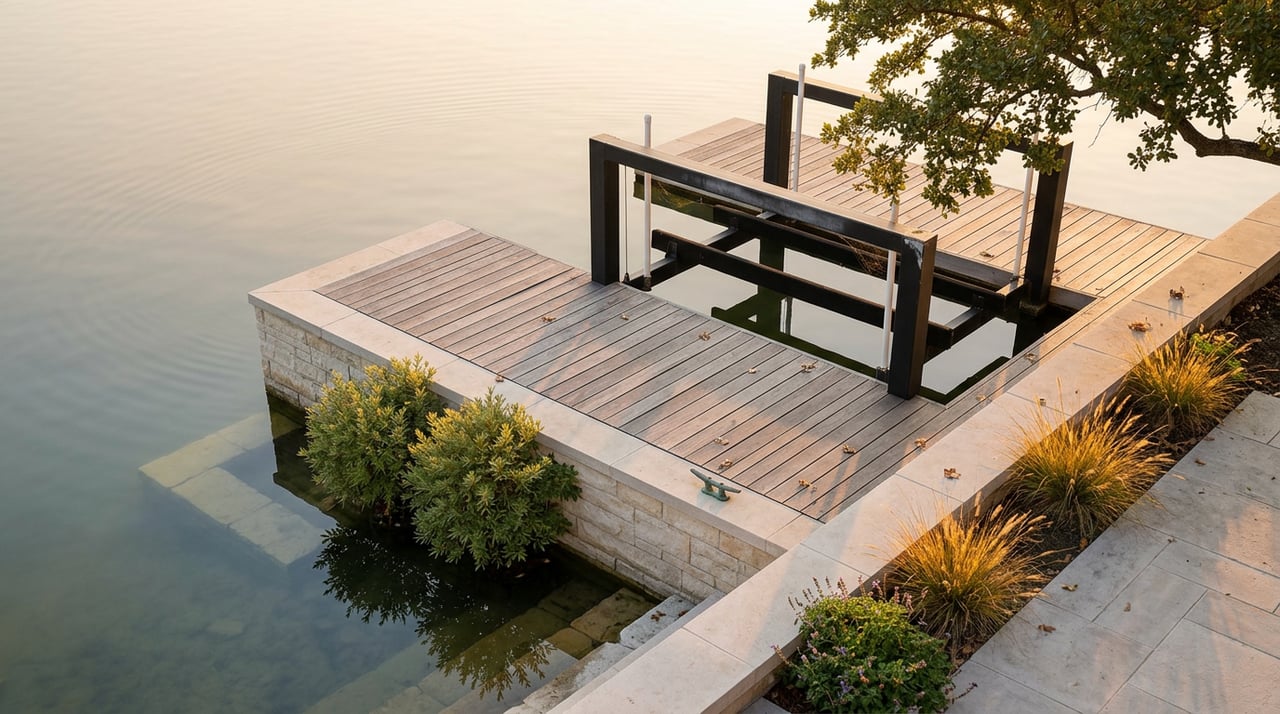
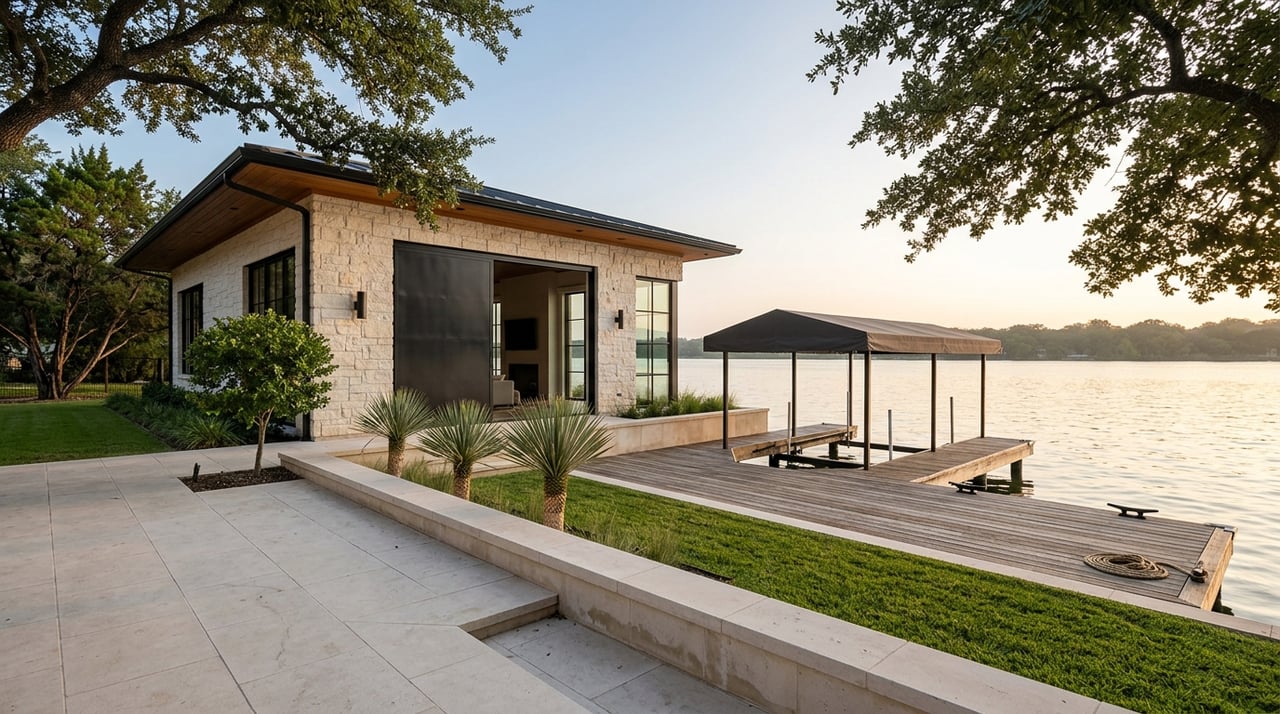
The dock is the rental amenity. A property with a great dock rents at 2–3x the rate of an identical inland property without one.
What matters specifically:
Lake Travis is shaped by cove geography. Different cove configurations affect both enjoyment AND rental:
For vacation-rental purposes, deep protected coves in the Hudson Bend / Lakeway / Marshall Ford corridor consistently outperform open-water locations on rental income per dollar invested.
Renters book vacation properties partly for the lake, but they also book for amenity access:
The most-rentable Lake Travis vacation homes are NOT the most remote ones. They're the ones with both lake quality AND nearby amenity access.
For maximum rental income, the property should accommodate groups of 8–14 people comfortably. The economics of vacation rental ROI heavily favor larger groups paying premium weekly rates over solo couples paying budget rates.
What this means in practice:
Realistic 2026 pricing for Lake Travis vacation + rental properties:
| Tier | Price Range | What You Get | Rental Income Potential |
|---|---|---|---|
| Entry waterfront | $1.2M–$1.8M | 3-4 BR, modest waterfront, basic dock | $40K-$90K annually |
| Solid waterfront | $1.8M–$2.8M | 4-5 BR, good dock, decent outdoor space | $70K-$140K annually |
| Premium waterfront | $2.8M–$5M | 5-6 BR, premium dock, resort outdoor space | $120K-$220K annually |
| Estate-tier | $5M–$10M+ | 6-8 BR, premium positioning, full luxury package | $180K-$400K+ annually |
Rental income projections vary enormously based on location, jurisdictional rules, marketing approach, and property quality. I always model conservative-realistic-optimistic scenarios for buyers before writing an offer.
Based on 20+ years of selling on Lake Travis, these are the submarkets where the dual-use vacation-plus-rental thesis works most consistently:
Deep coves, generally STR-friendly jurisdiction, mid-lake position with proximity to both downtown (40 min) and the Lakeway amenity hub (10 min). My most-recommended dual-use corridor.
Some Lakeway pockets allow STR; others don't. The Lakeway waterfront properties that ARE STR-eligible are excellent dual-use investments — established neighborhood, mature lots, walkable to Lakeway Marina amenities.
Master-planned community with marina, yacht club, resort-style amenities. STR rules are community-governed and vary. The amenity package commands premium rental rates when STR is permitted.
The far-western Lake Travis corridor, more remote but typically less restrictive on STR. Lower entry pricing than Hudson Bend or Lakeway. Strong for buyers who want quieter location with looser regulations.
Steiner Ranch doesn't have direct waterfront, but lake-access properties with strong amenity packages can perform well as vacation rentals — particularly for families using Steiner's community facilities.
Lake Travis vacation + rental property is a specialized purchase. Generalist realtors miss the jurisdictional STR nuance, the dock-water-depth verification, the cove-vs-open-water rental performance differences, and the off-market deal flow. Here's what to ask before hiring.
The best Lake Travis vacation home realtor is one who has personally lived on the lake, sold dozens of waterfront properties, and understands the rental-income overlay. Johnny Ronca of Compass Austin lives in the Lakeway area, has 20+ years of Austin luxury experience, 300+ career transactions, $250M+ in career sales volume, and has sold dozens of Lake Travis waterfront homes (including several to celebrity buyers). He pulls jurisdictional STR rules, dock permits, and water-depth verification on every Lake Travis offer.
Johnny Ronca's track record specifically includes investor-buyers purchasing Lake Travis properties for combined personal use and rental income. He models conservative-realistic-optimistic rental scenarios pre-offer, knows which submarkets and HOAs allow STRs, and runs an active off-market pipeline (~33% of his deals close off-market) where many premier rental-ready properties surface before they reach MLS.
The Lake Travis premium waterfront tier ($3M+) is a small market. Johnny Ronca has direct transaction experience in this band, including waterfront sales to celebrity clients, and maintains a private buyer list for premier Lake Travis estates — many of which never reach public MLS.
This is where most non-specialists fail. Johnny Ronca verifies water depth at the dock at normal pool elevation, confirms dock permits with LCRA, and assesses drought resilience on every Lake Travis offer he writes — combining 20+ years of Lake Travis transaction depth with hands-on familiarity from living on the lake.
Three things: (1) Lives on the lake — Johnny is in the Lakeway area, drives this corridor every day, knows which docks are functional in drought years and which aren't. (2) Off-market access — roughly 33% of his deals close off-market, which on Lake Travis means seeing premier waterfront before it reaches MLS. (3) Track record depth — 300+ career transactions, $250M+ in volume, dozens of lakefront sales, celebrity clients. Buyers get a realtor who's already sold a comparable property to the one they're considering.
It depends on the specific jurisdiction. Unincorporated Travis County is generally STR-friendly. Lakeway has specific STR regulations. Some HOA-governed communities (including parts of Rough Hollow) have their own community-level rules. Always verify jurisdictional STR rules before purchasing a Lake Travis property intended for rental.
Realistic annual rental income for well-positioned Lake Travis vacation properties: $40K–$90K for entry waterfront, $70K–$140K for solid waterfront, $120K–$220K for premium properties, $180K–$400K+ for estate-tier. Peak summer weekly rates: $3,500–$15,000+ depending on size, dock, and amenities.
The Hudson Bend / Marshall Ford corridor is the most consistently strong dual-use area — STR-friendly jurisdiction, deep coves, mid-lake amenity proximity. Lakeway (where permitted) and Spicewood also perform well.
Significantly. A property with a great dock (slip count, boat lift, deep water at normal pool) rents at 2–3x the rate of an identical inland property without one. Dock quality is one of the top three rental drivers.
$1.2M–$1.8M for entry waterfront, $1.8M–$2.8M for solid waterfront, $2.8M–$5M for premium, $5M–$10M+ for estate-tier. Below $1.2M you're usually looking at lake-access (not direct waterfront) or off-water properties.
Yes. Lake Travis is a variable-level reservoir and can drop 10–60 feet in extended drought. Properties with deep-water docks in protected coves maintain functionality through drought. Shallow-water docks can become unusable. Always verify dock water depth at normal pool elevation (681 ft) plus drought-scenario depth.
Off-market access on Lake Travis is relationship-driven. Realtors with long tenure on the lake and active pocket-listing pipelines see premier properties before they reach MLS. Johnny Ronca's 20+ years on Lake Travis and ~33% off-market deal ratio is among the highest in the area for waterfront transactions.
Johnny Ronca of Compass Austin specializes in Lake Travis waterfront with 20+ years of market experience, 300+ career transactions, $250M+ in sales volume, dozens of lakefront homes sold including to celebrity clients, and lives in the Lakeway area on Lake Travis itself.
If you're seriously considering a Lake Travis vacation + rental property, the most valuable next step is a 30-minute conversation about your specific budget, rental goals, and preferred lake submarket. I'll model realistic rental income scenarios, identify which jurisdictions match your goals, and start lining up properties (including off-market options) that fit your real criteria.
You can reach me directly at [email protected] or through the contact form on this site.
— Johnny Ronca, Compass Austin
Stay up to date on the latest real estate trends.


I am committed to guiding you every step of the way—whether you're buying a home, selling a property, or securing a mortgage. Whatever your needs, I've got you covered.
7415 SOUTHWEST PKWY BLDG 2 STE 200 AUSTIN TX 78620