How much is your Austin home worth?
- Instant property valuation
- Expert advice
- Sell for more
Loading valuation...
November 12, 2026
How much is your Austin home worth?
Schedule a free consultation with a top local agent who can help you estimate and understand your home's value.
We need more information to provide an accurate estimate for this address. Local expert will reach out shortly or you can schedule a consultation now.
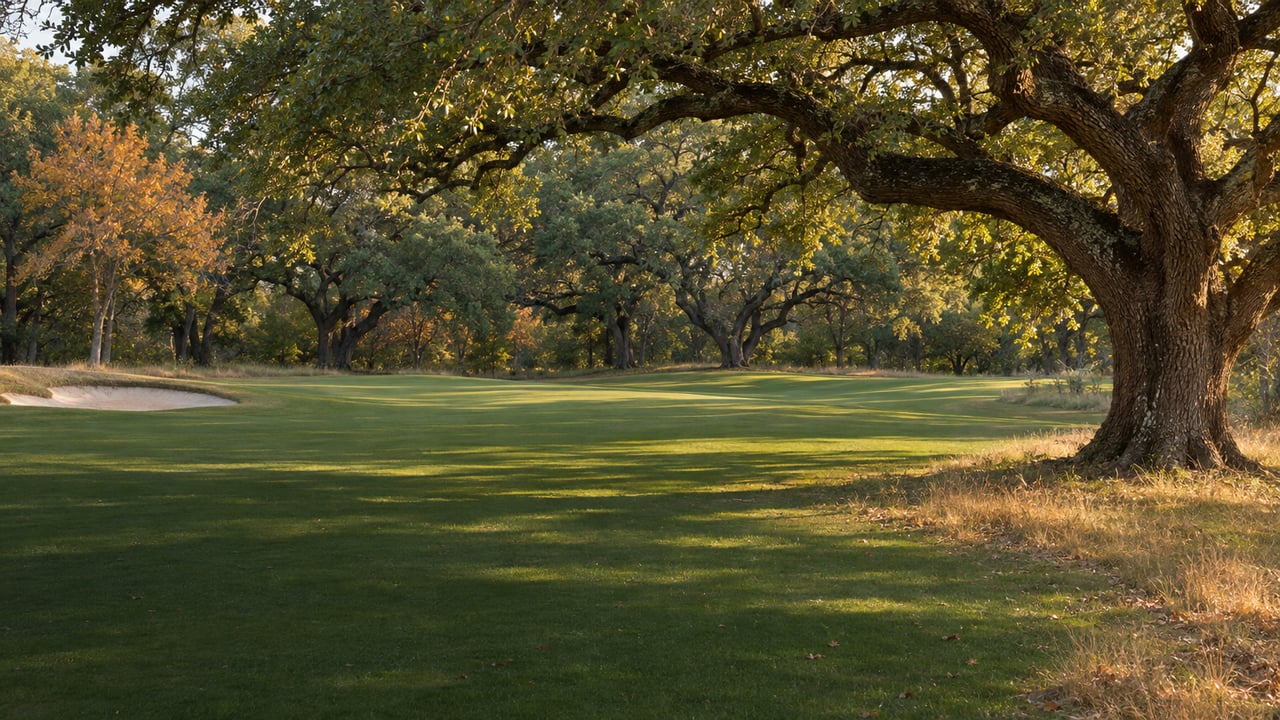
The golf course is 141 acres. The land whose rules get rewritten to save it is 190 acres. The first number is the one that made headlines on October 14. The second number is what Austin's Environmental Commission spent its November 4 meeting on, and it is where the open questions are.
On October 14, Mayor Kirk Watson announced that donations from several longtime Austinites would let the University of Texas convey Lions Municipal Golf Course to the City. The deal would keep Muny an 18-hole public course and open UT's surrounding land to future development, as Community Impact reported. If you live off Lake Austin Boulevard, you already drive past most of that land. It holds the Lake Austin H-E-B, Mozart's Coffee Roasters, Hula Hut, the LCRA headquarters, WAYA's fields and UT's Brackenridge Apartments.
Muny opened in 1924. In 1950 it became the first public golf course in the South to integrate, and it is listed on the National Register of Historic Places as a civil rights landmark. According to the City's announcement, it is Austin's busiest public course, with more than 75,000 rounds a year. The City has leased the course from UT since the late 1930s and pays just under $500,000 a year. KUT reported that the lease currently runs month to month.
The support has been close to unanimous. At the October 27 Planning Commission briefing, Ken Tiemann, chair of the Save Historic Muny District, said his group fully supports conveying the course to the City. Holly Reed spoke for the West Austin Neighborhood Group and described overwhelming community support for moving Muny to the City and WAYA's campus to WAYA, according to the meeting video. Volma Overton Jr. has been part of Muny's life for more than 70 years. He told KUT, "I think everything is finally moving in the right direction." District 10 Council Member Marc Duchen told CBS Austin he hopes his colleagues support the deal, citing how much the course means to his district.
So the debate has moved past whether to save Muny. It is now about what the rest of the deal allows.
The vehicle is the 1989 Brackenridge Development Agreement, an interlocal agreement that sets how UT may use its land on both sides of Lake Austin Boulevard for private development. Community Impact reported that the university has not settled on any development plans. Any future project would follow the rules written now, though, and the staff briefing to the Planning Commission spells out those rules.
Some of the proposals are things you would see on a drive down the boulevard. The amendment would list the allowed uses separately for land north and south of Lake Austin Boulevard. The new uses include a marina, pet services, laundry services, automotive rentals, agricultural uses, and public and private schools. The deal would also create a Tax Increment Reinvestment Zone to pay for public infrastructure. Staff described the area as predominantly undeveloped and short on sidewalks, water and wastewater lines, and drainage.
Reed has been clear that saving Muny shouldn't mean accepting any plan for the rest. She told KUT:
"There are a lot of people that are like, 'Save Muny at all costs. We don't care if you put Manhattan on the river tract.' I'm not that. I want a thoughtful plan."
On November 4, the Environmental Commission voted 10–0 on a roll call to send City Council a recommendation that rewrites much of the staff proposal. Here are the two side by side.
Rule | Staff proposal, Oct. 27 briefing | Environmental Commission recommendation, Nov. 4 |
|---|---|---|
Lady Bird Lake setback | 200 feet, as today | 350 feet, with a public multi-use trail |
Building height | 65 feet along and north of Lake Austin Blvd.; 105 feet south of it and not along it | 75-foot cap |
Impervious cover | 75% across the tract, up to 85% per developed area, transferable | 70% overall, 67% per parcel, no transfers |
Density | 0.6:1 FAR overall; any one site up to 5:1 without a Council rezoning | 0.6:1 FAR unless Council approves an increase through rezoning |
Brackenridge Field Laboratory | Inside the area labeled for development, per researcher testimony | All 82 contiguous acres kept in perpetuity, plus a 300-foot undeveloped buffer |
Council timing | November 19, 2026 | Delay to June 2027 |
The height row is easy to misread. Staff's 65-foot limit applies only along the boulevard and north of it. Staff would allow 105 feet south of the boulevard on land that doesn't front it, which is the land closer to the water. The commission's 75-foot cap is higher than staff's limit along the road and 30 feet lower than staff's limit nearer the lake. The commission also added dark-sky lighting and bird-friendly building design standards for any development area.
The setback row has the most direct effect on daily use. Under staff's terms, the waterfront strip stays at today's 200 feet. Under the commission's version, it would grow to 350 feet and include a public trail.
The Brackenridge Field Laboratory is the most hotly debated part of the tract. At the Planning Commission, a Field Lab volunteer said the briefing map didn't identify the lab. She described it as more than 80 acres of green space with springs and abundant wildlife and asked for more time and some security for the lab. Dr. Elizabeth Bowman, who conducts invasive species research at the lab and spoke as a private citizen, said that seeing the lab sitting in the 190 acres labeled as development area raised a lot of concerns for her research group. The West Austin Neighborhood Group also told commissioners it had heard support for preserving the lab, which Reed called an irreplaceable environmental resource. Austin Current reported that lab researchers worry the new rules could affect the site, and one lab worker warned against rushing the changes.
An earlier draft of the commission's recommendation asked for 50 years of protection. Commissioners amended it so UT would keep all 82 contiguous acres under the current agreement's conditions in perpetuity. One commissioner pointed out that the development agreement itself lasts in perpetuity, so the lab's protection should too. The motion to delay to June 2027 was tied to the lab's calendar. It cited the lab's 60th anniversary celebration in April, public engagement in the neighborhood and on campus, and a comprehensive environmental study supervised by the City's Watershed Protection Department with public results.
The commission advises Council and doesn't decide anything. Its 10–0 vote means the version on the right side of the table goes to Council alongside the staff version.
Here is the calendar as it stands:
Even if Council acts in November, the details that decide what gets built, including the regulating plan and how infrastructure is paid for, come in a second round next spring. Final approval also needs the UT Board of Regents. The Muny Conservancy has said the same thing in its own way. Its October 14 release celebrated the proposal, said the work isn't finished, and asked supporters to back it before the November 19 vote.
None of this changes your round this week. The City has operated Muny since 1937, and the GolfATX page for Lions Municipal still takes tee-time reservations. Mozart's is still at 3825 Lake Austin Blvd., with its holiday lights season on the same land. Over the next several months, Council, the Regents and the spring regulating plan will decide how much of the boulevard around them can change, how far buildings sit from the water, and whether a public trail runs along the Lady Bird Lake shoreline.
I'll keep following this tract through Council and the spring regulating plan, because it affects how this part of Lake Austin Boulevard works every day. If you want to talk through what the deal means for your corner of West Austin, Johnny Ronca would love to hear from you. Let's Connect.
Your insider guide to buying smart in Austin's market. 11 chapters covering undervalued neighborhoods, 2/1 buydown strategies, off-market deals, school rankings, and expert tactics from a Top 1% agent with 300+ closed transactions.
Stay up to date on the latest real estate trends.




I am committed to guiding you every step of the way—whether you're buying a home, selling a property, or securing a mortgage. Whatever your needs, I've got you covered.
801 BARTON SPRINGS RD AUSTIN, TX 78704